The Ultimate Productivity Stack for 2025
In nowadays’s fast-paced digital global, constructing your Ultimate Productivity Stack is the key to running smarter, not harder. The proper combination of tools can streamline your workflow, reduce pressure, and maximize outcomes.
That’s where the idea of the Ultimate Productivity Stack is available. Instead of jumping among random apps, you construct a stack of gear that work together—like puzzle pieces—to help your goals. Whether you’re managing a team, running a commercial enterprise, or simply trying to organize your private existence, having the right stack in 2025 can make all the difference.
Why Build an Ultimate Productivity Stack?
Before diving into the gear itself, it helps to understand why a productivity stack subject. Most human beings already use a mixture of apps: a challenge supervisor here, a calendar there, maybe a few cloud storage and a chat device. But frequently, those apps don’t “speak” to each other, leaving you juggling notifications and losing time copying statistics backward and forward.
The Ultimate Productivity Stack solves that by means of specializing in integration. Your obligations, schedules, communique, and files sync together seamlessly. This creates a single surroundings that supports your day-to-day routine in preference to adding complexity. The advantages are clean:
- Time Savings: Less switching among structures.
- Reduced Stress: Everything is organized in a single area.
- Better Collaboration: Teams paintings in sync without endless emails.
- Scalability: Your stack grows with you, from solo work to complete teams.
Now, let’s stroll through the important categories that make up the last productivity stack in 2025.
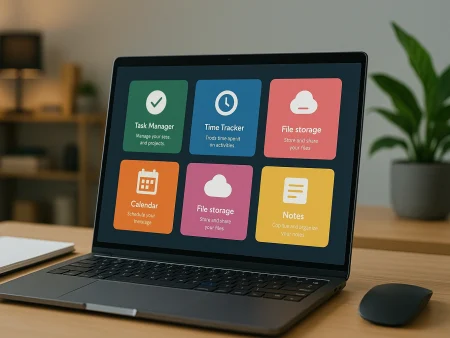
1. Task Management – Stay Organized
At the center of any productivity gadget is a challenge supervisor. Without a way to seize and prioritize obligations, it’s easy to get crushed. The nice alternatives in 2025 balance simplicity with advanced features:
- ClickUp: A powerhouse device with purpose-setting, time monitoring, doctors, and collaboration multi-function. Perfect for startups and professionals who want the whole lot under one roof.
- Todoist: Clean, light-weight, and powerful for non-public and professional use. It’s particularly robust for people who select an easy interface.
- Trello: Visual boards that make mission management clean. Great for innovative groups who want to see duties move from “to-do” to “completed.”
The proper task supervisor ensures you’re not simply busy but effective. You can break down big initiatives into doable steps, assign closing dates, and track development. Pair it with automation (more on that later), and you’ll in no way pass over a mission once more.
2. Communication – Keep Everyone Connected
No productivity stack is complete without robust verbal exchange tools. With hybrid and far-off work turning into the norm, staying connected is vital.
- Slack: Real-time messaging with channels, threads, and integrations for nearly every device you use. It’s the digital workplace space in which paintings occur.
- Microsoft Teams: A robust platform that ties in chat, video calls, and Microsoft 365 gear. Ideal for corporations already invested in Microsoft’s atmosphere.
- Zoom (with integrations): Still the move-to for conferences, now with whiteboards and third-party app support.
The key isn’t just having a talk tool—it’s maintaining conversations prepared and searchable. In that manner, you’re no longer digging through infinite emails to find one small element.
3. Scheduling – Take Control of Your Time
Time control is which suitable intention that often fails. A sturdy calendar system keeps you grounded and ensures responsibilities are truly in shape into your day.
- Google Calendar: Simple, effective, and integrates with nearly everything. It’s the spine for many productivity stacks.
- Outlook Calendar: Great for experts in Microsoft-based agencies.
- Calendly: Automates scheduling via letting people e-book meetings at some stage in your unfastened slots, warding off the feared back-and-forth emails.
Adding cognizance blocks, reminders, and automatic syncing along with your undertaking manager makes your timetable sensible and manageable.
4. File Storage – Centralize Your Documents
Scattered files are a productivity killer. Centralized storage guarantees your files are steady, on hand, and easy to percentage.
- Google Drive: Integrates naturally with Google Workspace and most productivity apps.
- Dropbox: Still one of the best for syncing and collaboration across teams.
- OneDrive: Strong option for Microsoft customers with seamless Office integration.
The real trick is integration. Imagine uploading a report in Google Drive that mechanically attaches to a Trello card or Slack thread. That’s why storage turns into a part of your productivity gadget in preference to only a folder within the cloud.
5. Automation – Let Repetitive Tasks Run Themselves
One of the biggest jumps in productivity is cutting repetitive work. Instead of manually transferring information, automation tools handle it for you.
- Zapier: Connects thousands of apps. For example, you can make a rule where every new email in Gmail becomes a task in Todoist.
- Make (East Integromat): a powerful option with more visual workflows.
- IFTTT: Simple automation for personal productivity, such as syncing notes between apps.
When the automation moves in the background, you save hours each week and reduce mental loads. Your final productivity stack must have at least one automation tool to glue everything together.
6. Focus and Well-Being – Don’t Overlook the Human Side
Productivity isn’t just about tools—it’s additionally approximately preserving energy and consciousness. In 2025, health apps are an important part of the stack:
- Notion with addiction monitoring templates: Combine obligations with non-public desires.
- Headspace or Calm: For quick meditation breaks to reset your thoughts.
- Forest or Focus@Will: Apps that reduce distractions and inspire deep concentration.
The satisfactory stack balances efficiency with well-being, ensuring you don’t burn out even as you chase productivity.
7. Collaboration and Knowledge Management
For groups, collaboration equipment extends past chat and storage. You need a shared space for brainstorming, documenting tactics, and taking pictures.
- Notion: Combines notes, databases, and wikis. It’s turned out to be the move-to device for crew information bases.
- Confluence (through Atlassian): Perfect for established documentation, especially in larger businesses.
- Miro: Visual collaboration with whiteboards for brainstorming and planning.
These tools make certain facts don’t get lost in random chats or emails.
Building Your Custom Productivity Stack
Here’s the crucial truth: there’s no single “best” productivity stack. The Ultimate Productivity Stack is non-public. It relies upon your workflow, dreams, and alternatives. A freelancer can also simply need Todoist, Google Calendar, and Google Drive. A growing startup would possibly rely upon ClickUp, Slack, and Notion. A company team may be locked into Microsoft Teams and OneDrive.
When constructing your stack, ask yourself:
- Do the gears combine? Integration reduces guide paintings.
- Do they shape your workflow? Tools ought to adapt to you, not the other way round.
- Are they scalable? Your stack must grow as your initiatives expand.
- Does it reduce friction? If a tool looks like more work, it doesn’t belong.
Future Trends in Productivity Stacks
As we appear in advance, some traits are shaping the destiny of productivity gear:
- AI Integration: Tools like Notion AI and ClickUp AI can summarize notes, draft emails, or propose next steps.
- Unified Platforms: More apps are bundling capabilities collectively (like ClickUp combining obligations, medical doctors, and chat).
- Voice and Automation: Expect extra herbal language instructions and historical past workflows.
- Personalization: Tools will adapt to your conduct, supplying tailored recommendations to keep time.
Staying open to those developments guarantees your productivity stack evolves with the era.
Your Productivity, Your Way
The Ultimate Productivity Stack isn’t about chasing each brilliant new app. It’s about building a toolkit that works for you. The proper stack should feel invisible—assisting your day in place of distracting from it.
Whether you’re a solo entrepreneur, a supervisor leading a group, or a person just seeking to control private goals, a thoughtfully selected productivity stack in 2025 let you recognition on what subjects maximum: getting things completed.
Experiment, integrate, and refine till your stack feels herbal. Once you discover the proper balance, you’ll discover that productivity isn’t approximately doing extra—it’s about doing what matters with readability and simplicity.
FAQs about Ultimate Productivity Stack
1. What is an Ultimate Productivity Stack?
It’s a custom-designed set of gear that works together to help you manage responsibilities, time, conversation, and documents greater effectively.
2. Which apps are essential for a productivity stack?
Task managers, verbal exchange gear, calendars, cloud storage, and automation structures are the center necessities.
3. Do I want all the gear mentioned to be productive?
No. The first-class productiveness stack is the one that fits your workflow, no longer necessarily the biggest one.
4. How does automation improve productivity?
Automation reduces repetitive tasks by way of connecting apps and going for walks obligations in the past, saving you time.
5. Can a productivity stack assist with personal dreams too?
Yes. Tools like Todoist, Notion, or Google Calendar can help you music private tasks, conduct, and goals.